

A Local Push for Pesticide-Free Living
An Italian community mobilizes to ban chemical pesticides and promote sustainable agriculture, challenging entrenched agricultural norms and legal frameworks.
What if a river were not a resource to be managed, but an ancestor to be protected—with the full weight of the law behind it?
In 2017, the New Zealand Parliament passed a law that sent shockwaves through the global legal community. It didn’t just add more environmental regulations or create a new park; it changed the ontological status of a geographical feature. The Whanganui River was granted the legal status of a person.
This means the river is no longer a “thing” to be owned, bought, or sold. It is a living entity with its own rights, duties, and liabilities. For the Whanganui Iwi (the Māori people of the river), this was not a “new” innovation, but the formal recognition of a relationship that has existed for over 800 years.
For over a century, the Whanganui River—the third-longest in New Zealand—was managed through a Western colonial lens that viewed the natural world as a set of fragmented assets. This led to three systemic failures:
The river was systematically modified to serve industrial needs. Its headwaters were diverted for the Tongariro Power Scheme, reducing flow and altering the river’s temperature and ecosystem. It was dredged for gravel and commercial transport, with little regard for the subterranean life or the spiritual health of the water.
Under English Common Law, the Crown claimed ownership of the riverbed. This was a direct violation of the Māori worldview, where the river is a tūpuna (ancestor). For Māori, you cannot own your ancestor any more than you can own the air. This conflict led to the longest-running legal battle in New Zealand history—a 170-year struggle for recognition.
Typical environmental law treats a river as a collection of parts: the water (managed by one agency), the bed (managed by another), the fish (managed by a third), and the banks (privately owned). This “reductionist” approach made it impossible to protect the river as a single, coherent living system.
The solution provided by the Te Awa Tupua (Whanganui River Claims Settlement) Act was a radical “system redesign” that moved the river from the category of property to the category of persona.
The law recognizes the river as Te Awa Tupua, an “indivisible and living whole, comprising the Whanganui River from the mountains to the sea.”
Since a river cannot physically walk into a courtroom or sign a contract, the law created a “human face” for the river. Two guardians, known collectively as Te Pou Tupua, act as the river’s representatives.
The Act establishes four core values (Tupua Te Kawa) that must guide every decision made by any agency affecting the river:
The implementation of Te Awa Tupua was part of a larger reconciliation process between the Māori people and the New Zealand government.
The Whanganui case proved that “Rights of Nature” could be integrated into a stable, modern democracy. It moved the concept from “activist dream” to “legal reality.”
Since 2017, the “Whanganui Model” has been adapted worldwide:
Locally, the Iwi now have a “seat at the table” that is no longer negotiable. Any development—from a new bridge to a water take for a farm—must now be measured against the Tupua Te Kawa values.
The system is a work in progress, facing several “real-world” frictions:
Te Awa Tupua matters because it dismantles the Human-Centric Illusion. In the Western legal tradition, the world is divided into “Persons” (who have rights) and “Things” (which are owned). By moving a river into the category of “Person,” we admit that humans are not the only stakeholders on the planet.
It forces us to think in Geological Time. Instead of planning for the next election cycle, a guardian for a river must think about the health of the water for the next thousand years.
System name
Legal Personhood of the Whanganui River (Te Awa Tupua)
Location
Whanganui River, New Zealand
Domain
Governance / Environment / Indigenous rights
System type
Rights-of-nature legal framework + co-governance model
Scale
Regional / national legal system
Year started
2017
An Italian community mobilizes to ban chemical pesticides and promote sustainable agriculture, challenging entrenched agricultural norms and legal frameworks.

At the Citizens’ Assembly in Ireland, randomly selected citizens deliberate on complex issues and shape national policy recommendations.

A global movement empowering communities to build local resilience in response to climate change, energy descent, and economic instability.
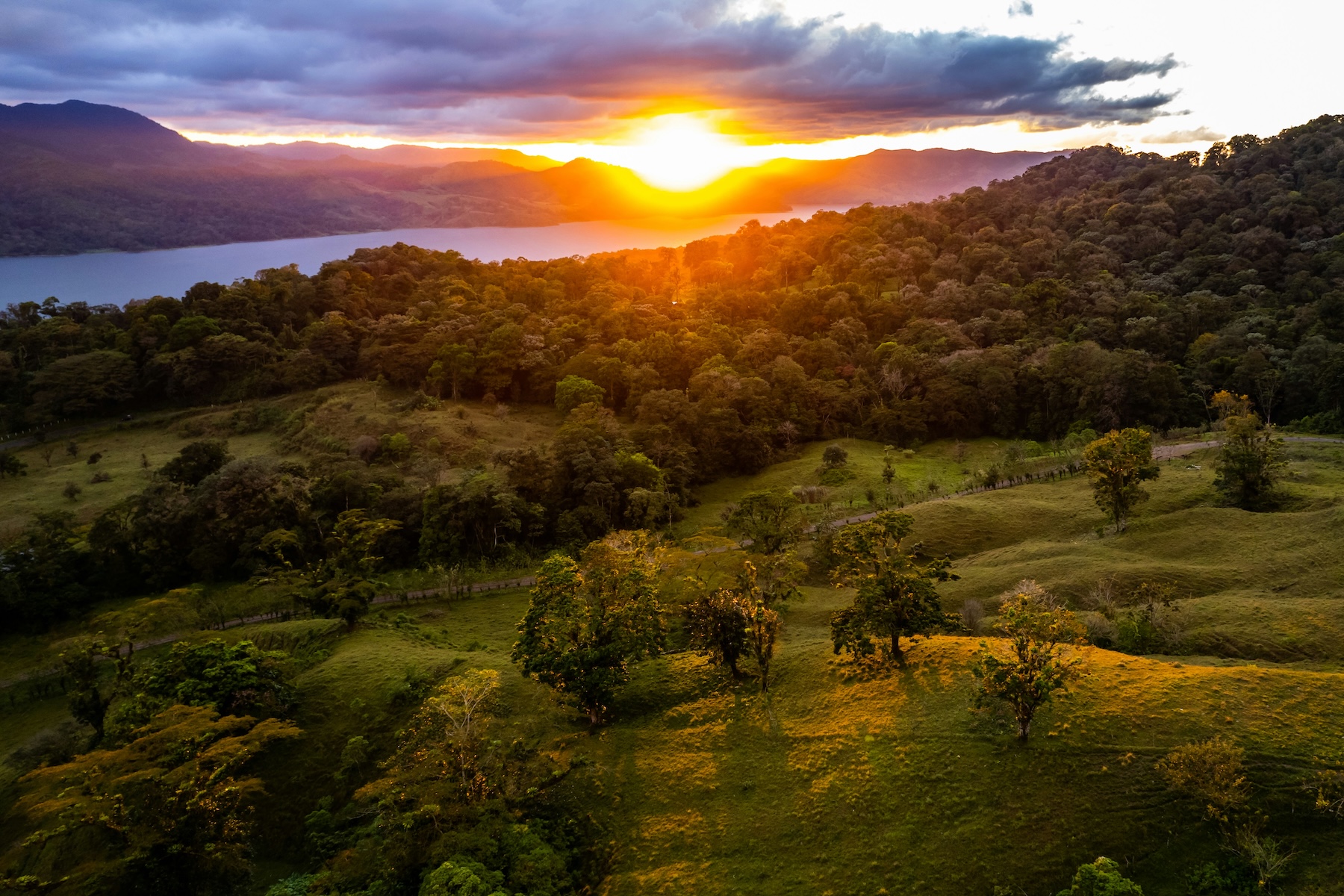
Costa Rica’s Green Energy Matrix is a world-leading example of how a middle-income nation can decouple economic growth from carbon emissions.